
Remote Patient Monitoring
Table of Contents:
- Eligibility Rules
- CPT Rates
- Consent
- Add RPM
- Manage RPM
- Clinical Time Logging
- Approve Time
- Due Reminders
Eligibility Rules:
- One should have at least one chronic condition
- Should have an active insurance
- And, should be 18 years and above
CPT Rates:
- There are five CPT codes associated with RPM.
- Below are the details for each of these CPT codes, along with their applicable rates.
| CPT Code | Rate |
| 99453 | $21.33 |
| 99454 | $51.34 |
| 99457 | $51.36 |
| 99458 | $41.15 |
| 99470 | $25.85 |
| 99445 | $51.34 |
Instructions:
- Click the RPM tab on the patient dashboard.
- As shown, there is an accordion at the top. You can expand or collapse it as needed. By default, the patient details accordion is collapsed.

- When you click the expand button, you can view the expanded Patient details, as shown below.
- On the left side, you can also see a call icon next to the Mobile number. This icon allows you to call the patient directly on his cell.

- Click on “Add RPM episode” to enter into “Consent” tab.
- You will see a wizard at the top, which has the following sections:
- Consent
- Chronic Diseases
- Devices
- Critical Alerts
- Interactions
Note: You can only view other sections when you submit Consent. Once Consent is submitted you can Add/ Edit/ Navigate in any order.
Consent:
- If the patient agrees to participate in the RPM service, please click "Accepted by patient" and submit.

- The consent can be viewed in two languages: English and Spanish.
- By default, English is selected. Below is the consent screen in Spanish.

- If the patient does not agree, select “Rejected by patient” and submit. This can be edited later.

- You may select the consent date and time manually for previous dates; however, there are restrictions for future dates and times. By default, the current date and time are displayed.

- Accept consent and click on “Next” to enter “Chronic Diseases” tab.

Add RPM:
- After submitting the consent, Chronic Diseases section appears. You can navigate to any section after the consent is submitted.

- You can add Chronic diseases by clicking the “Add” button beside the label. The Chronic Care Problems pop-up will appear. To find a condition, click the Search button, fill in the remaining details, and then click the “Add” button. If you need to stop the process, click the “Cancel” button to cancel adding the chronic disease.

- Review/update Chronic diseases and click on “Next” to enter the “Devices” tab.
-
The Devices section is divided into two subsections: Assign Details and Order Details.
Assigns Details:
If a patient does not have any devices assigned, the Assign Details section will show an empty state. To assign a new device, click Assign Device. A pop-up will appear where you can enter the following information:


- Select the device name.
- Select the device model.
- Enter the device serial number (the device’s IMEI number).
- Select the device assigned date.
- Set the device status to Active.
- Click Add to assign the device.
Please repeat this process for each device you need to assign. Once the assignment is complete, the device details will appear in a table with the following columns: Device Name, Device Model, Device Serial Number, Device Assigned Date, and Device Status.

You may edit or delete devices directly from the table using the corresponding icons. Selecting Edit will open a pop-up window in which you can make the necessary changes, and then click Update to save them.
Order Details:
To place an order for a new device, please click the Order Details tab, and then select the + Order New Device button. This action will open a pop-up form containing the following fields:


- Shipping Name: The patient's name.
- Device: Select the device from the list. The list will only show devices that have been enabled at the center level.
- Email: The patient's email (optional).
- Shipping Address: The address where the device should be shipped.
- Country: Select the country.
- State: Select the state from the chosen country.
- Shipping City: Select the city from the chosen state.
- Postal Code: Enter the correct postal code.
- Order Note: Add any specific instructions or comments.
If you choose Blood Pressure Monitor, an additional dropdown will appear below. You must select the size, and it is required when you choose Blood Pressure Monitor.

Once you have completed the form, please click Submit. The order will be added as a new record in the table. You may review the order details by selecting the eye icon, which will open a sliding window for easier access.

Ordering Supplies:
If a device requires supplies, you may place an order by selecting the desired quantity and clicking the +Order Supplies button located above the table. The supplies will be shipped to the same address used for the device order. After the order is successfully submitted, a corresponding record for the supplies will appear in the table.

When you click Track Order, you will be able to view the tracking details for the device you ordered. Prior to any redirection, a pop-up will display the following message: "You are now leaving our application to view your tracking information on the carrier's website." If you select "Stay here", you will remain within the OnCare360 portal and will not be redirected. If you select "Continue", you will be taken to the carrier's website and shown the device tracking details outside of the portal.


After updating the Devices, click Next to proceed to the Critical Alerts section.
- Within this tab, there are two sections: Critical Alerts and Readings. If there are no readings, you will see the following empty state:
- In the Critical Alerts section, you will see all critical alerts that fall outside your configured minimum and maximum readings.

On the Readings tab, you can view all readings that have been provided by the devices. All available readings will be displayed here.

- You can view all Critical Alert records for the patient. Whenever the patient takes a Vitals test, if the readings are not within the normal range, they will be raised as Critical Alerts.
- To refresh the Critical Alerts and Readings tabs, click the Refresh icon to the left of Duration.
- You can also view the last 14 days of readings for the patient by clicking the Critical Alerts button, which will take you to the Critical Alerts tab within the Activity tab.
- On the top-right, you can also view the Alert icon, where you will find Critical Alerts Notifications. If there are no Critical Alerts, this is what you will see.
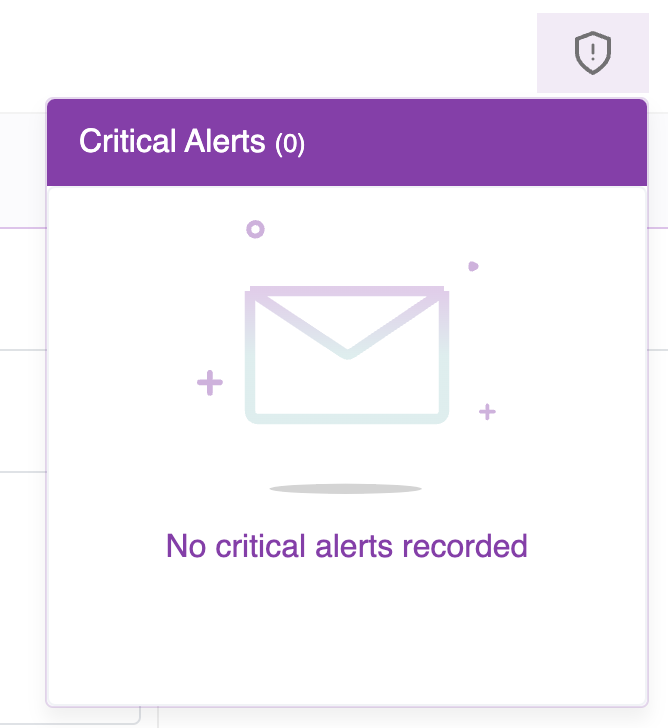
- Once any Critical Alerts are raised, this is how we will be notified.

- The Alert value is categorized into three types: High, Moderate, and Low. After you review the Critical Alerts, click the Next button. The Interaction screen will then appear.

Here, all the patient, Medical Assistant interactions will be recorded. Click on "Add Bill" Button to add an interaction. You can view pop-up as follows:

Fill the details and click on the "Add" Button. You can view it in the list as follows:

Manage RPM:
After adding the RPM, it will redirect you to the Chronic Diseases screen, as shown below:
You can update Chronic Diseases by hovering over the “Conditions.” You will see two available actions: Edit and Delete. Select the Edit icon to open a pop-up window, where you can make updates to the Conditions as follows:

On clicking the icon, Chronic Care Problems pop-up opens as follows:

- You cannot update the condition; only the condition details can be updated. Please ensure you also add the Condition Status.
- Once you have completed your updates, click the “Update” button. If you need to discard the changes, click “cancel.”
- For devices, you can make edits by clicking the Edit icon. To remove a device, click the Delete icon. After you have finished your changes, click the Update button.

Note: After the device is added, you can edit only the status. This is possible only while the status is active. Once the status is changed to any other state, you will not be permitted to edit any of the device fields. If you need to reactivate the device, delete the existing device using the same device ID, then add a new one.
When You click on Next You will be navigated to Devices section: In this section we have 2 sub section which are
- Assign Details.
- Order Details.
Assign Details:
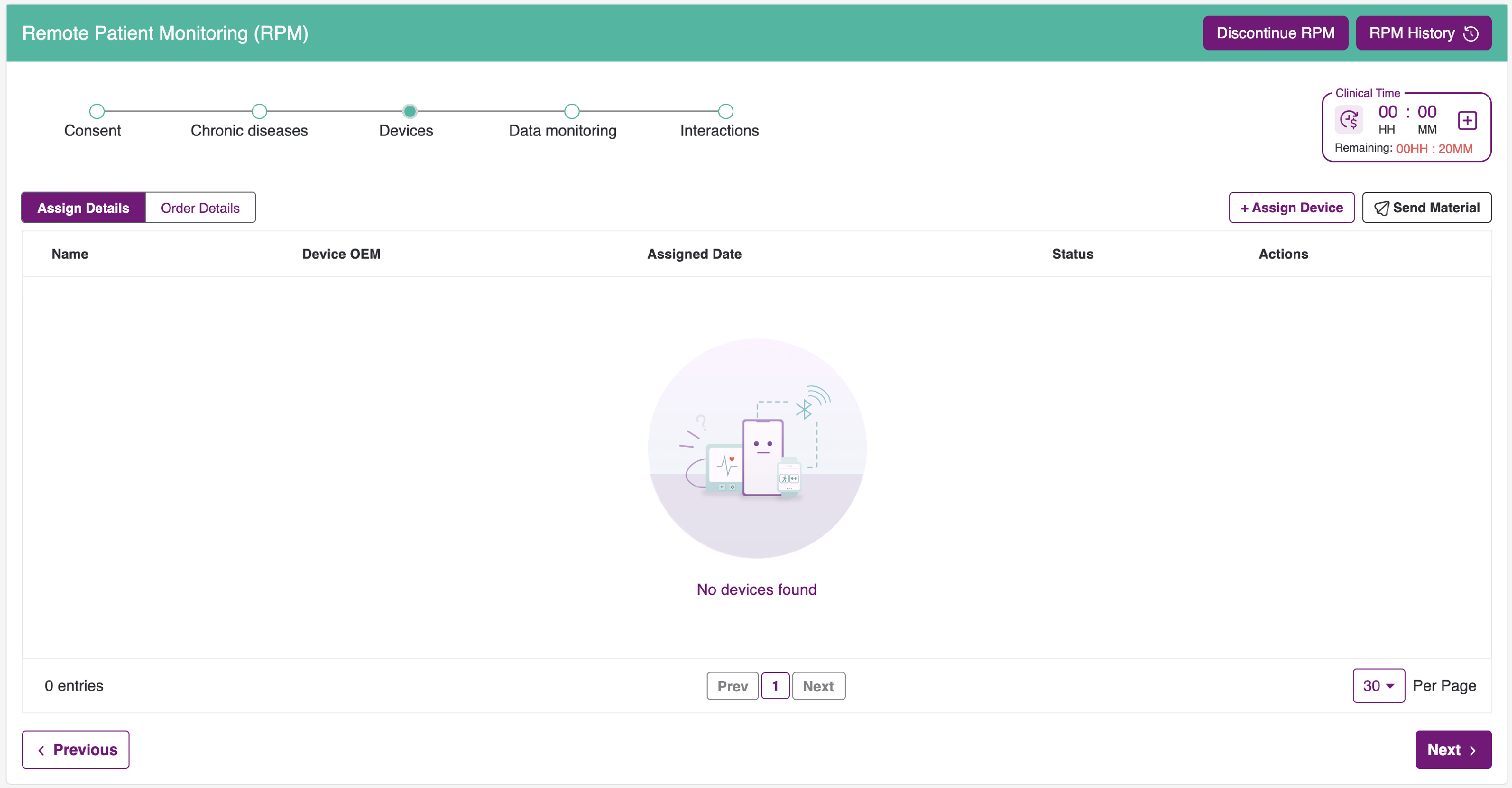
If a patient does not have any devices assigned, the Assign Details section will display an empty state. To assign a new device, please click Assign Device. A pop-up window will appear, allowing you to enter the following information:
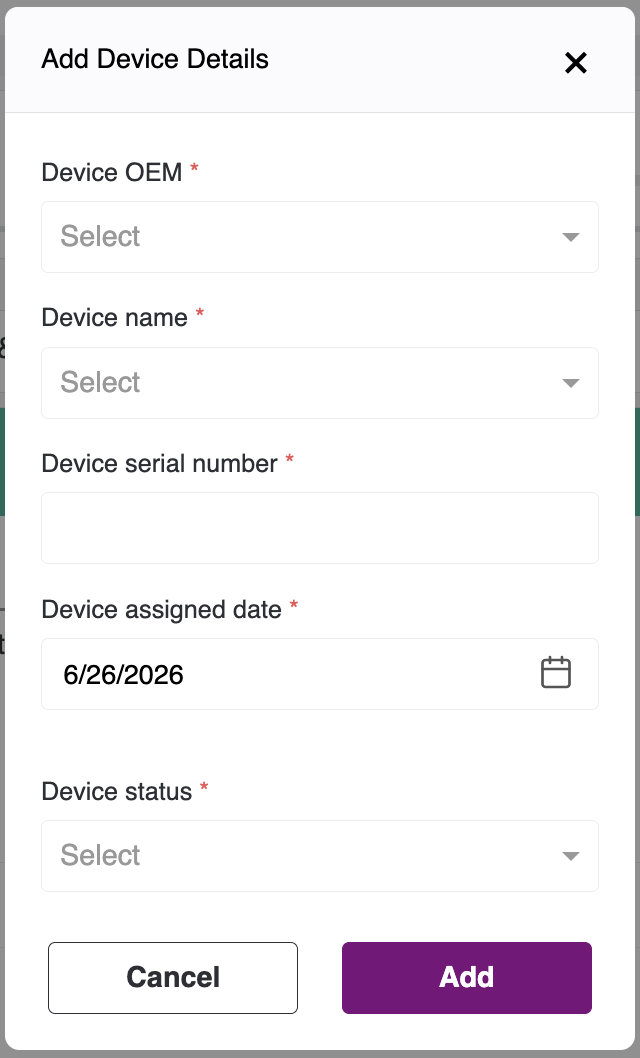
- Select the device name.
- Select the device model.
- Enter the Device Serial Number (the device’s IMEI number).
- Select the device assigned date.
- Set the Device Status to Active.
- Click Add to complete the device assignment.
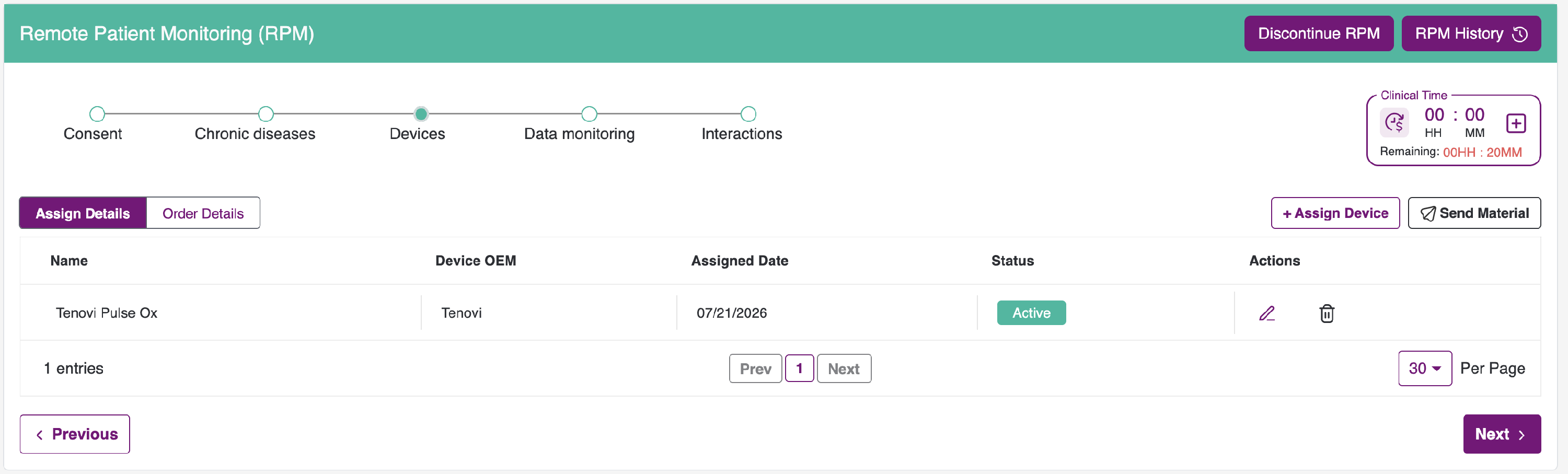
- Repeat this process for each device you need to assign. Once assigned, the device details will be visible in a table with columns for Device Name, Device Model, Device Serial Number, Device Assigned Date, and Device Status.
- You can edit or delete devices directly from the table using the respective icons. Clicking Edit will open a pop-up where you can make changes and click Update to save them.
Order Details
To order a new device, click on the Order Details tab and then click the +Order New Device button. This will open a pop-up form with the following fields:
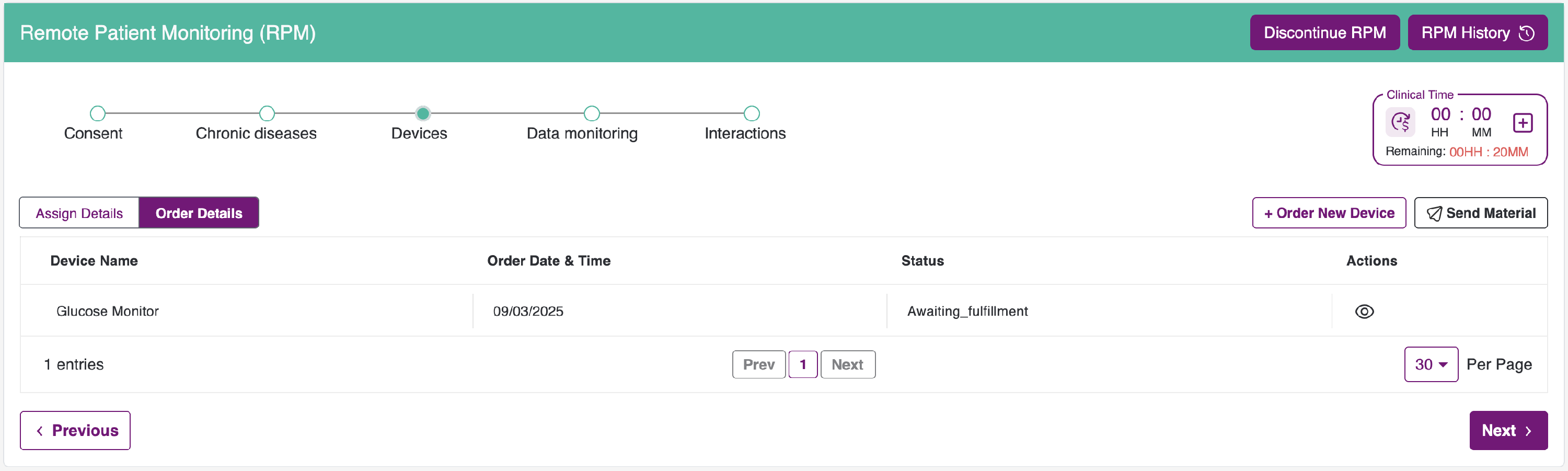

- Shipping Name: The patient's name.
- Device: Select the device from the list. The list will only show devices that have been enabled at the center level.
- Email: The patient's email (optional).
- Shipping Address: The address where the device should be shipped.
- Country: Select the country.
- State: Select the state from the chosen country.
- Shipping City: Select the city from the chosen state.
- Postal Code: Enter the correct postal code.
- Order Note: Add any specific instructions or comments.
If you choose Blood Pressure Monitor, you will see an additional dropdown below to select the size. You must select a size when you choose Blood Pressure Monitor.
- After completing the form, click Submit. The order will be added as a new record in the table. You can review the order details by selecting the eye icon, which will open a sliding window.
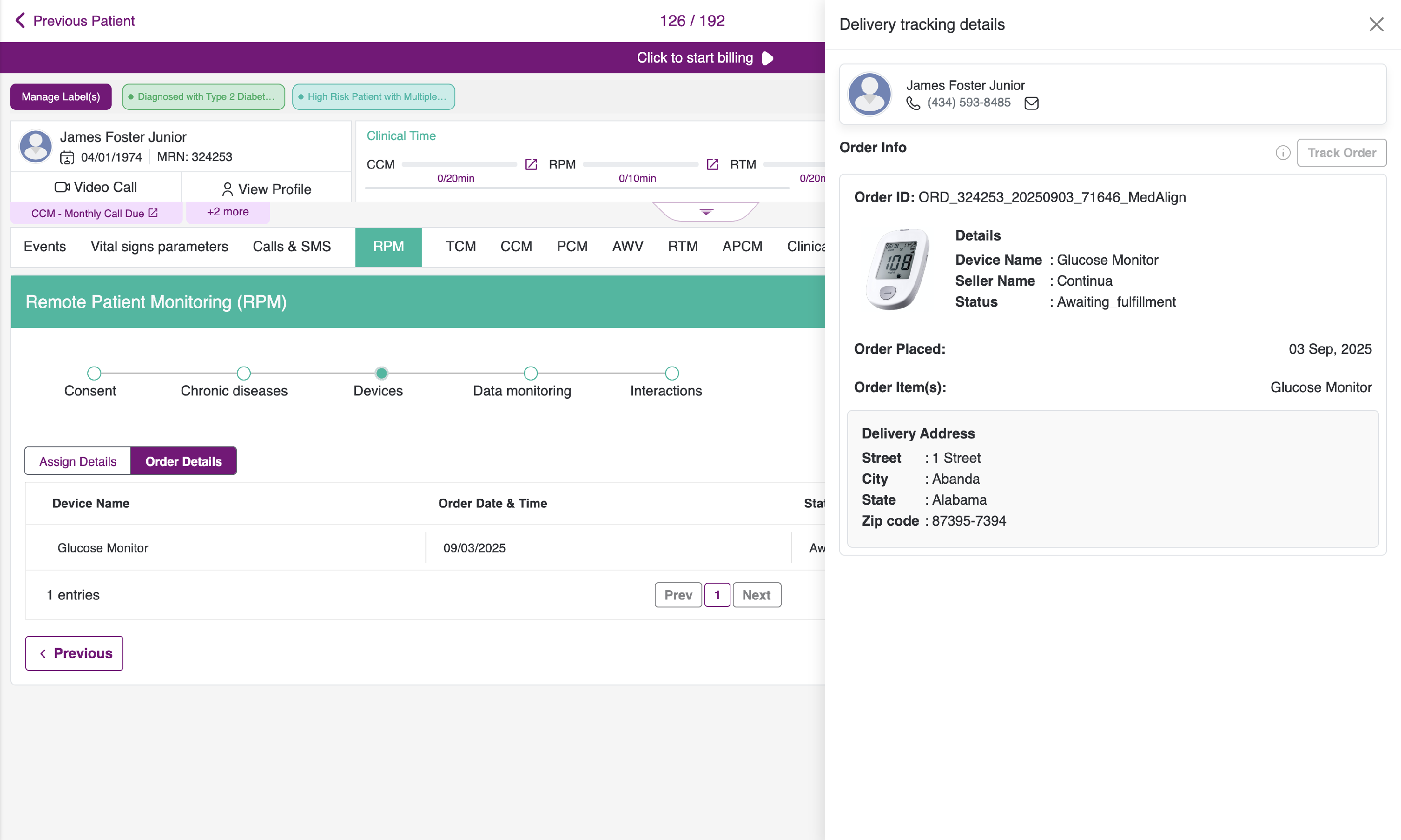
Ordering Supplies:
If your device requires supplies, you may place an order by entering the desired quantity and selecting the +Order Supplies button located above the table. The supplies will be shipped to the same address used for the device order. After the order is successfully processed, a corresponding record for the supplies will be displayed in the table.
Send Material:
Send Material:
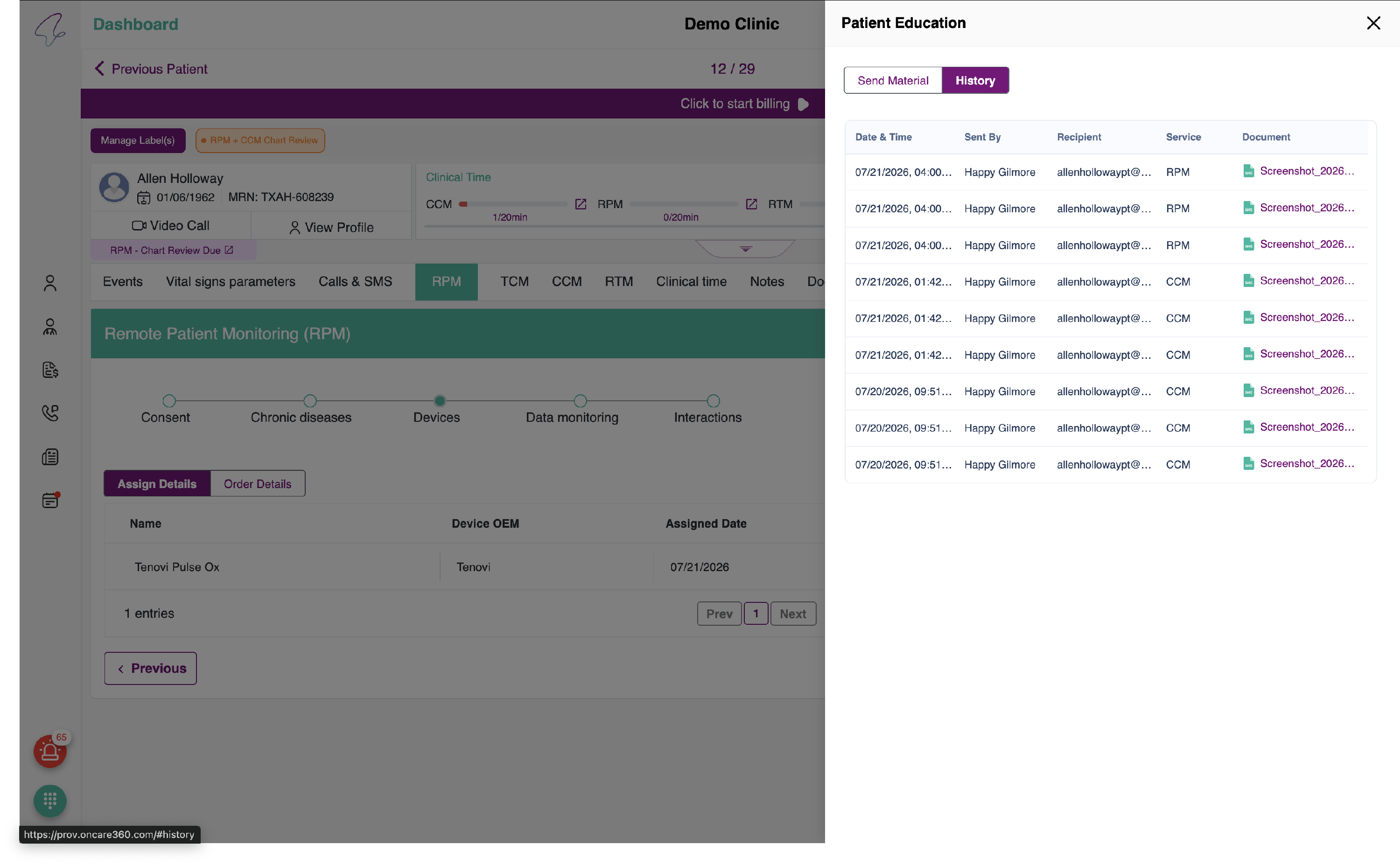
you will see a side panel on the right. In that panel, you will find the items listed below.
There are two sections
- Send Material.
- History.
1. Send Material:
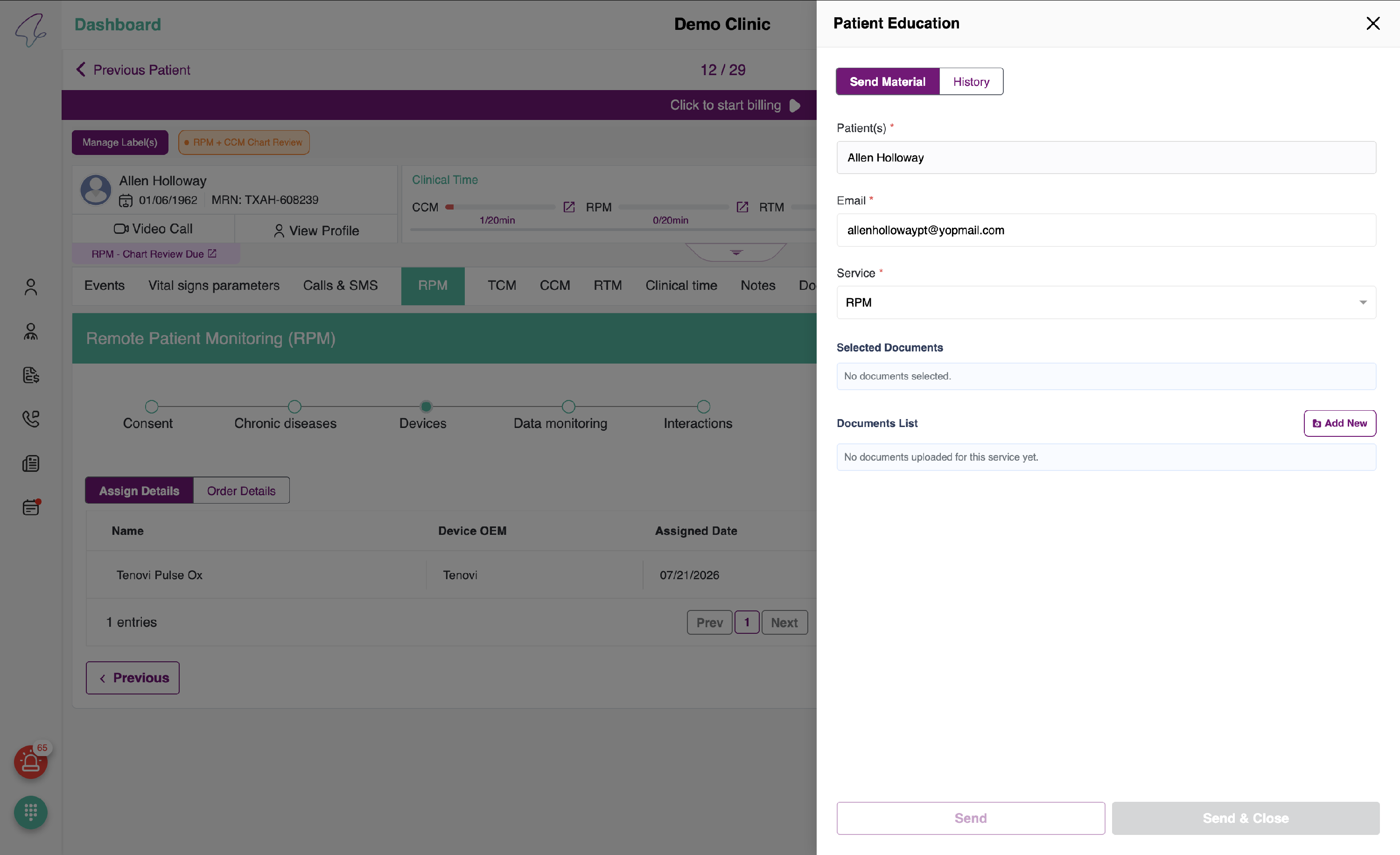
- Patients: Selected patient names.
- Service: The service will be automatically selected based on the care plan you are enrolled in for the education documents you would like to send.
- Selected Documents: You will see the list of documents you have chosen to send.
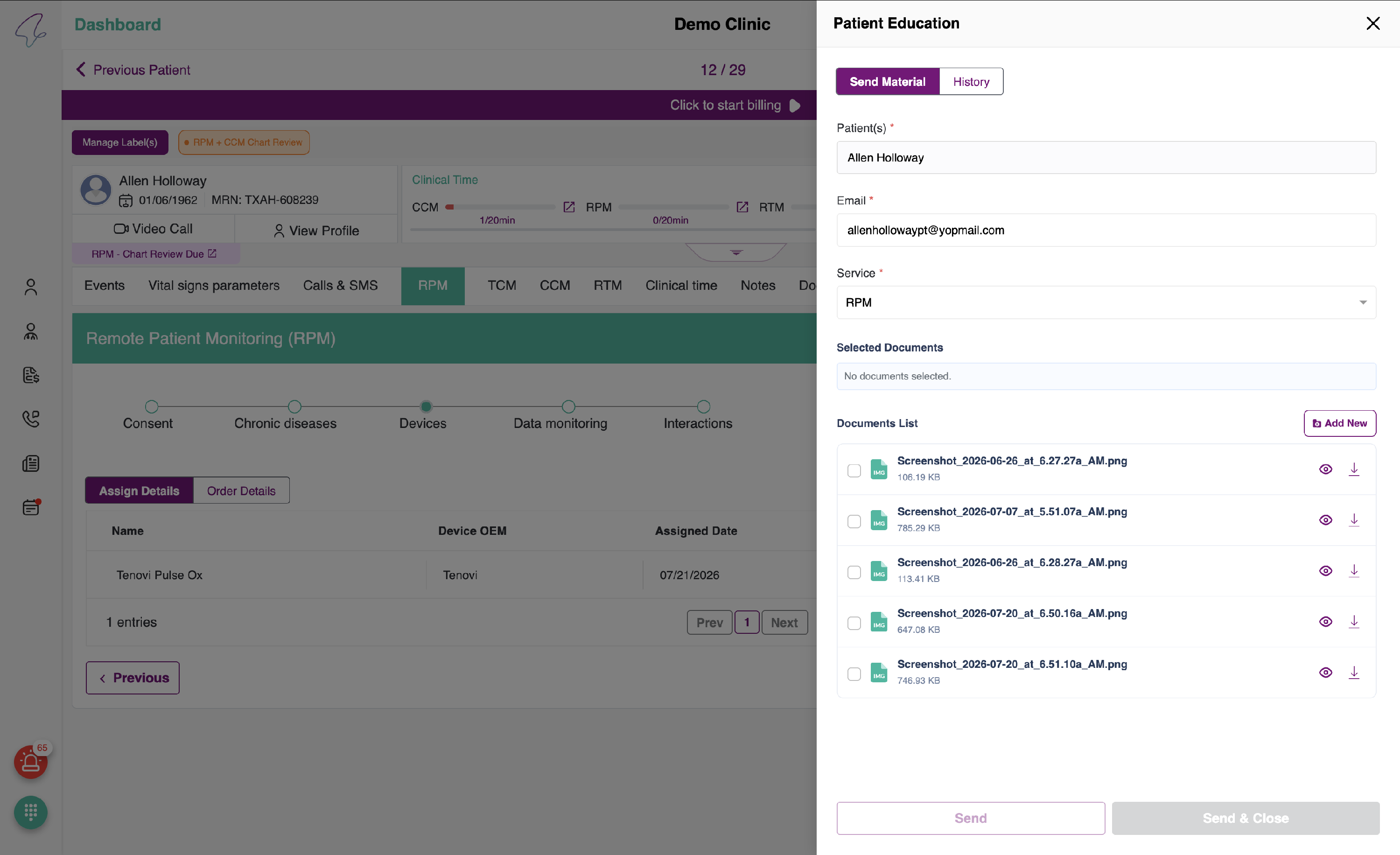
- Documents List: You will see the documents list based on the selected service. If no documents are available, click the Add New button.
When you click Add New, you will see a pop-up as shown below.
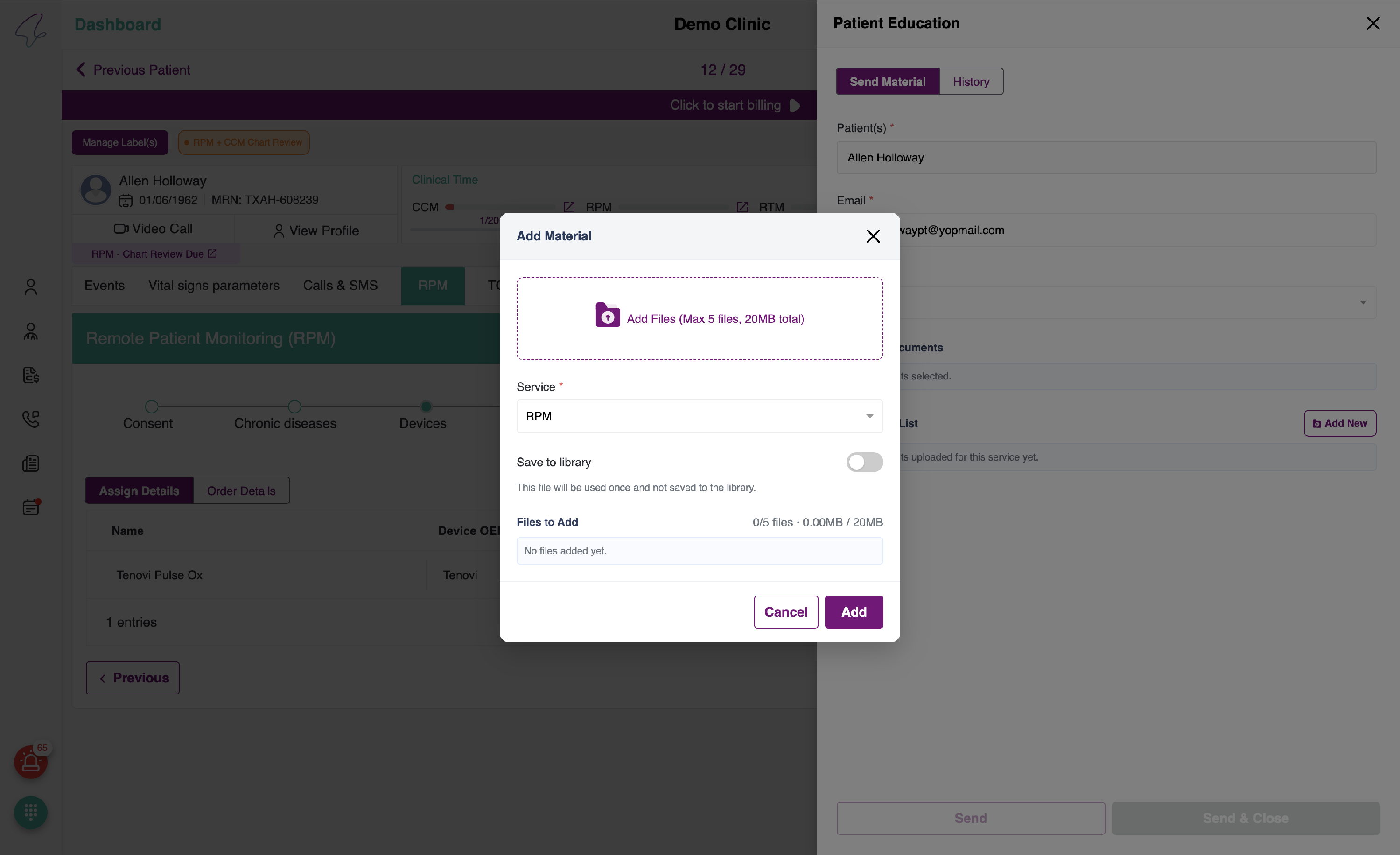
Click Add Files. You can choose up to 5 files, and the total file size must be less than 20 MB. Below, you will see the selected service under which you would like to keep the files. Further down, you will find a toggle labelled “Save to library.” If you want to reuse the document later, enable the toggle. (If you do not enable the toggle, the documents are available for one-time use only and will disappear when you close the complete tab).
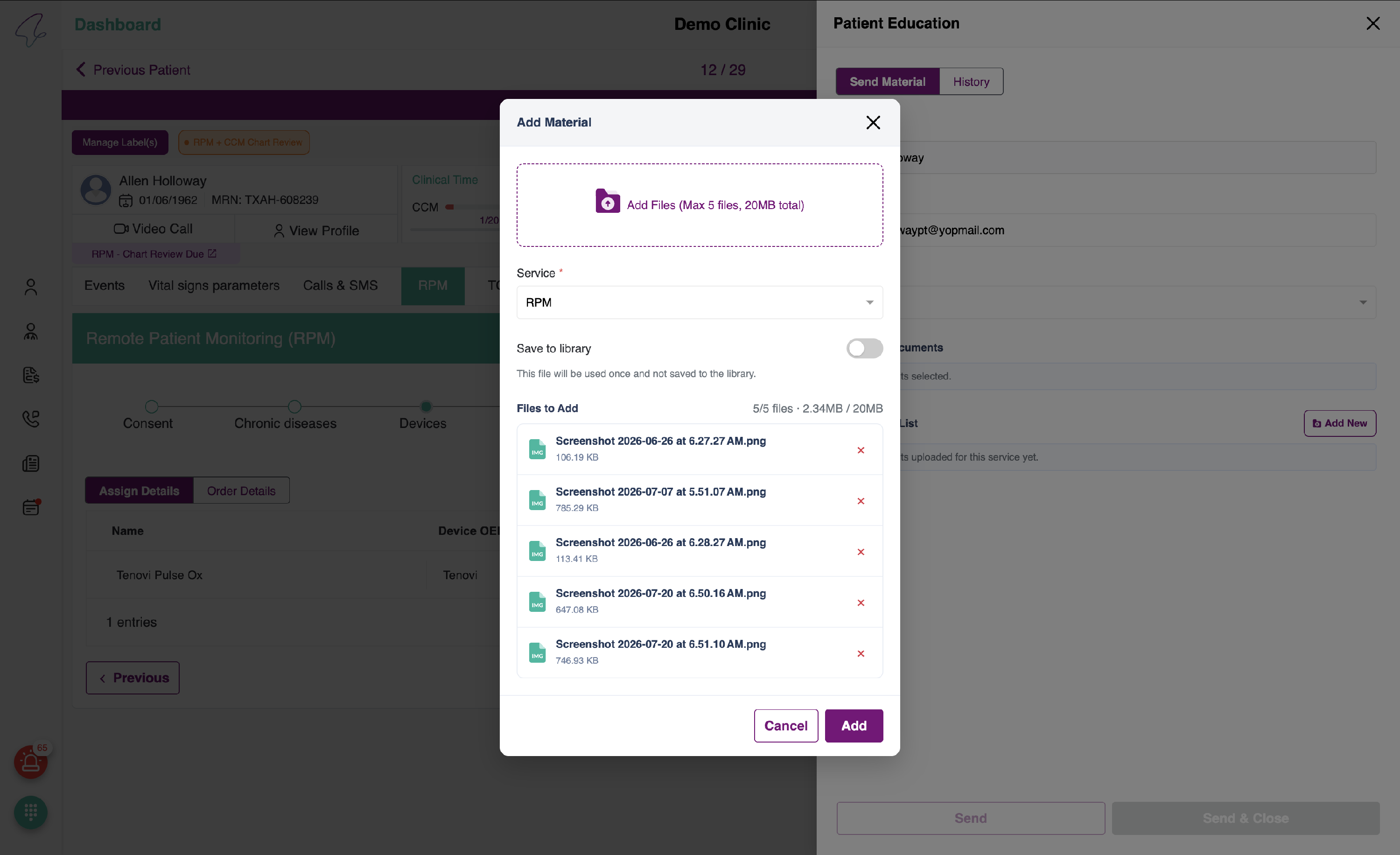
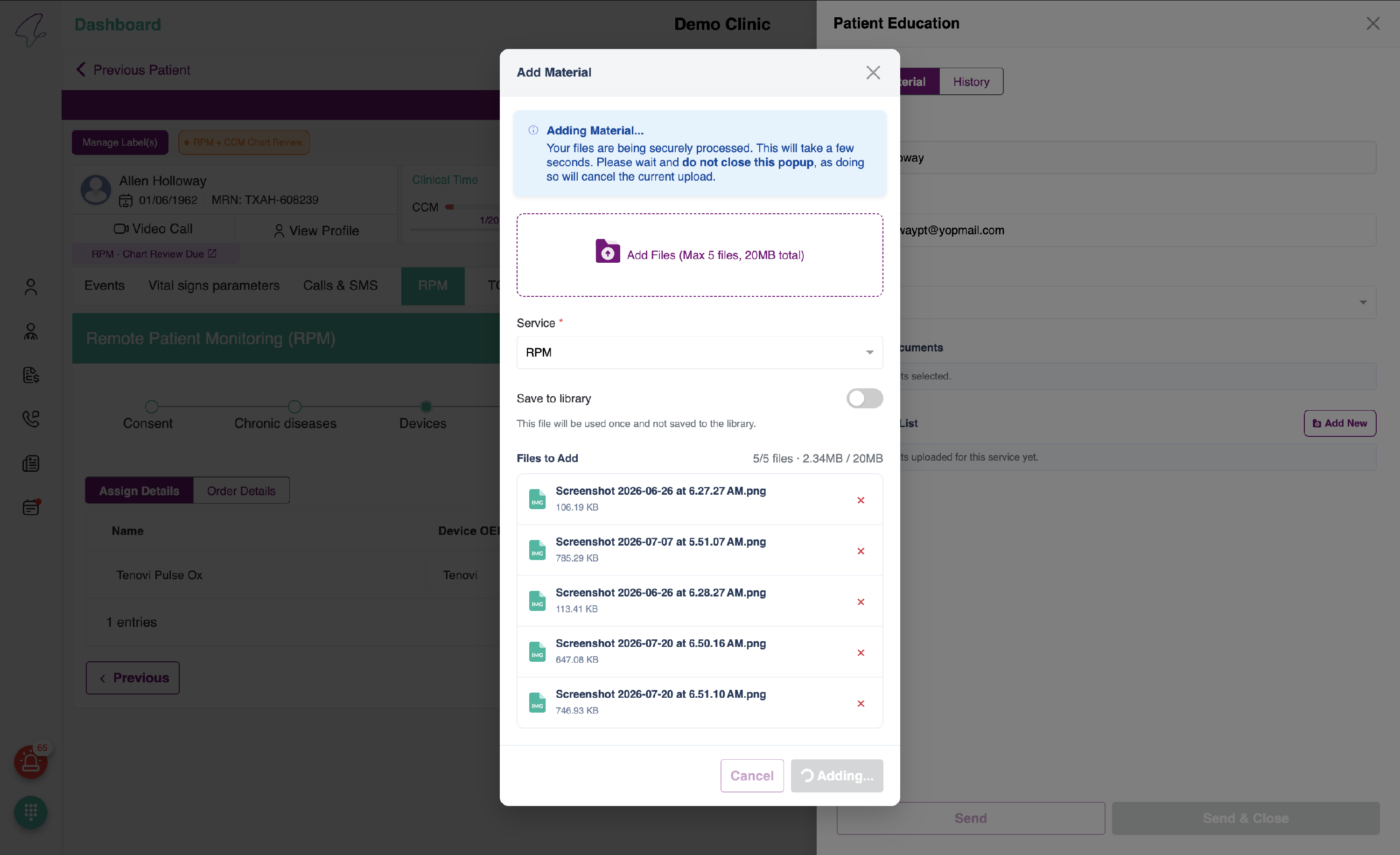
After you click Save, you can find the documents under the selected service. From there, select the documents you would like to send to the patients, and then click Send.
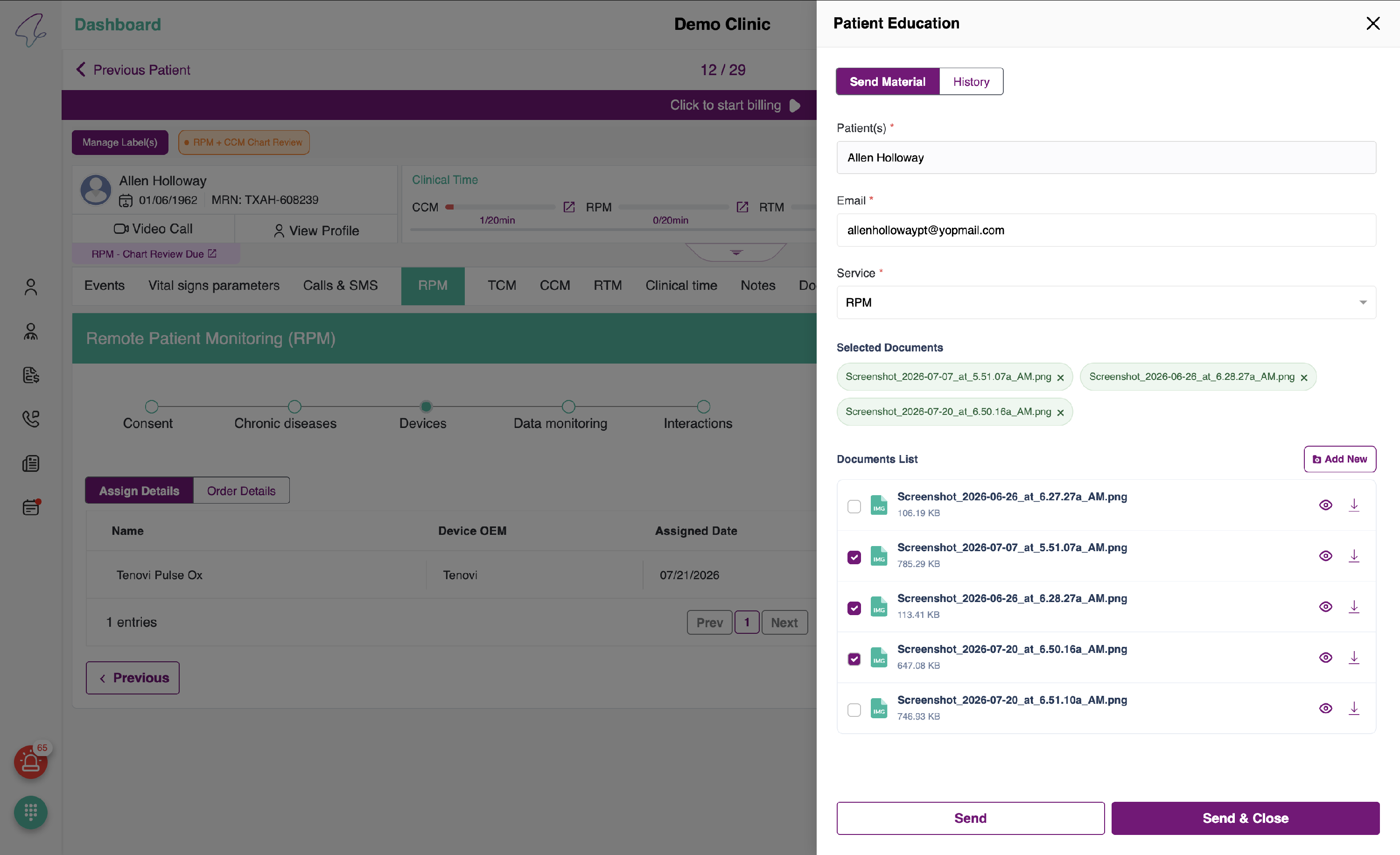
Note: You may send only documents with a total size of less than 20 MB.
When you click Send, the files will be sent to the patient’s email address, and the panels will remain open. If you click Send & Close, the emails will be sent, and once the process completes successfully, the panel will be closed.
2. History:
You can review the history in the respective Patient Care Plan tab.
Once you have updated the devices, click "Next" to proceed to the Data Monitoring section.
- You can view all reported Critical Alerts here.
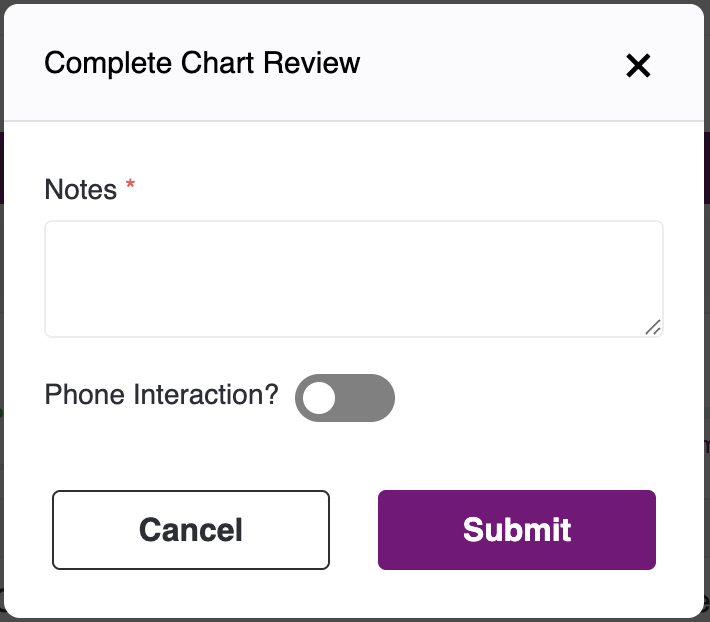
- You can see the Complete Chart Review Due Reminder we will get this due once every 7 days from the date of consent added. when closing this, due 5 minutes of clinical time will be added. reminder to check.
- Phone Interaction: This is to ensure that you have had a phone call with the patient regarding the critical alerts or other issue. If you already had a phone call, please enable the toggle. Then, when you click on submit.
- The Chart Review Due submit notes will be added to the clinical time bill and included in the clinical notes for the respective patient. Please note that the clinical time bill will be categorized under Phone Call if you have enabled the toggle else it will fall under Chart Review, and the clinical notes will be labeled as Clinical Time Notes.
- Once you submit the button will disappear and will be shown again after 7 days.
- Your changes will be updated. You may navigate between these sections using the Previous and Next navigation buttons located at the bottom.
- For interactions, you can click the Edit icon to update the billing details.
On clicking the Edit icon, you can view the pop-up as follows:

Once you have made the necessary changes, please click the Update button.
Discontinue RPM:
When you click on RPM history, a small pop-up window will open next to the button. From there, you can review the care plan enrollment history.

If you would like to discontinue the service, please click the “Discontinue RPM” button located next to the service history. After selecting the “Discontinue” button.
You will see the pop-up below if there is an active device assigned. You can keep the device active, deactivate it, or delete all devices.
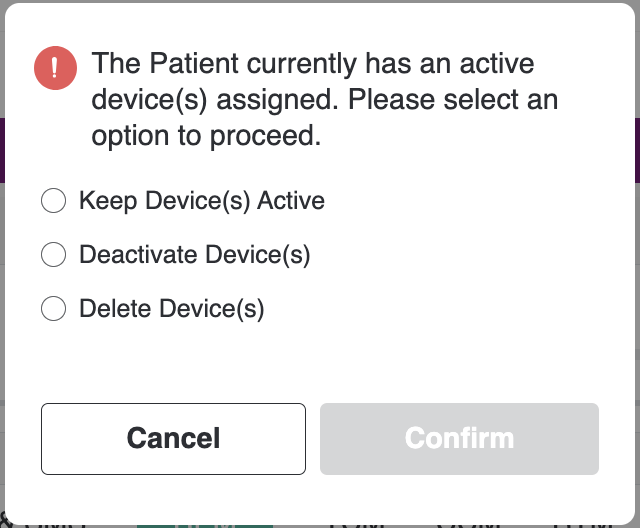
Please click Confirm to proceed. After you click Confirm, you will be prompted with a pop-up modal requesting the reason for discontinuing the care plan. You will also be able to choose from the available dropdown options, and the last option is “Others.” When you select “Others,” you will then see a text field below where you must provide the reason, as this is a mandatory field. Once you have entered the required information, click Discontinue, and the service will be discontinued.
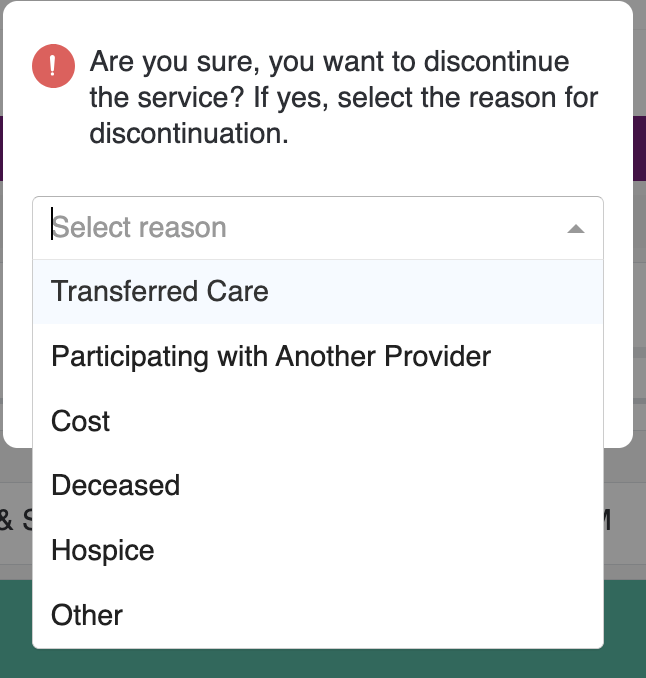
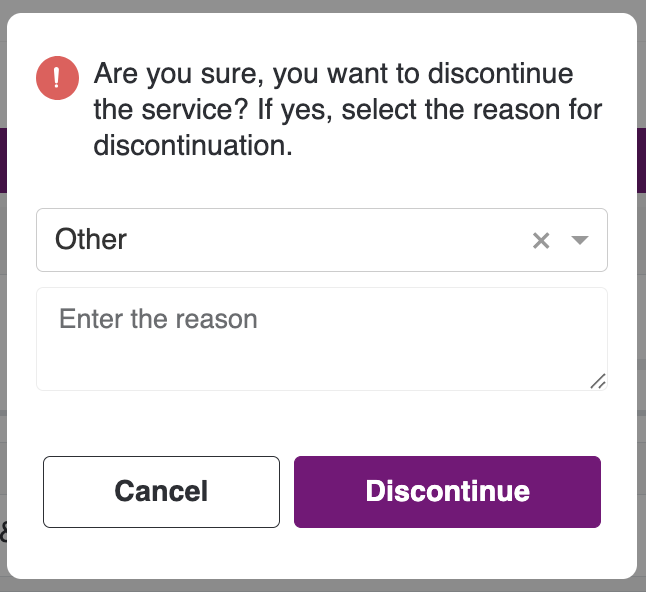
Once the service is discontinued, you can add, edit, or delete any chronic diseases, devices, data monitoring, and interactions.
Note: if you have selected Deactivate devices and then discontinued, all devices will be marked as inactive. If you selected Delete Device, all devices will be deleted.


Resume RPM Service:
- If you are willing to resume the service, please click on the RPM history. You will see a pop-up window where you can locate the Resume Service button at the top. Below it, you can view the service history.
- After you click Resume, you will be directed to the consent page, where you must accept the consent in order to resume the service. Once the service is resumed, you will regain the existing data, and you will be able to add, edit, or delete records as needed.


- Service - The service will be auto-populated as RPM.
- Activity - Activity will be auto-populated as billing.
- Date - Select to which date you would like to be billed.
- From - select the from time.
- To - select the to time.
- Notes - Add a note that is related to the billing.
When adding the record, it will be saved in the clinical time section.
Note: You can also edit the service after it has been added.
There are multiple ways to add a bill.
- From Patient Listing.
- From Patient Dashboard.
-
Manual Log Entry From Clinical Time.
1.From Patient Listing:

As shown in the image above, when you click on any service RPM in the patient listing, the following pop-up will appear.
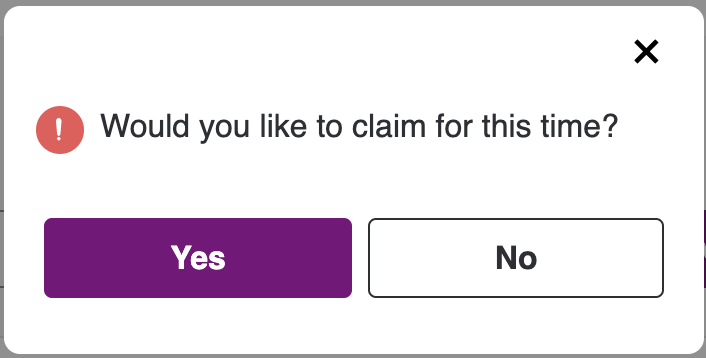
By selecting Yes, you will initiate the timer (billing time will begin) and be redirected to the corresponding service within the patient dashboard. If you select No, you will be directed to that specific service in the dashboard, without billing.
Billing Flow
-
If you have selected the APCM service and then clicked Yes to bill the time, you will be taken to the service page with the billing timer ON. This action will disable access to other services, because when billing for a particular service, you cannot navigate to other services such as PCM, TCM, RPM, or AWV.
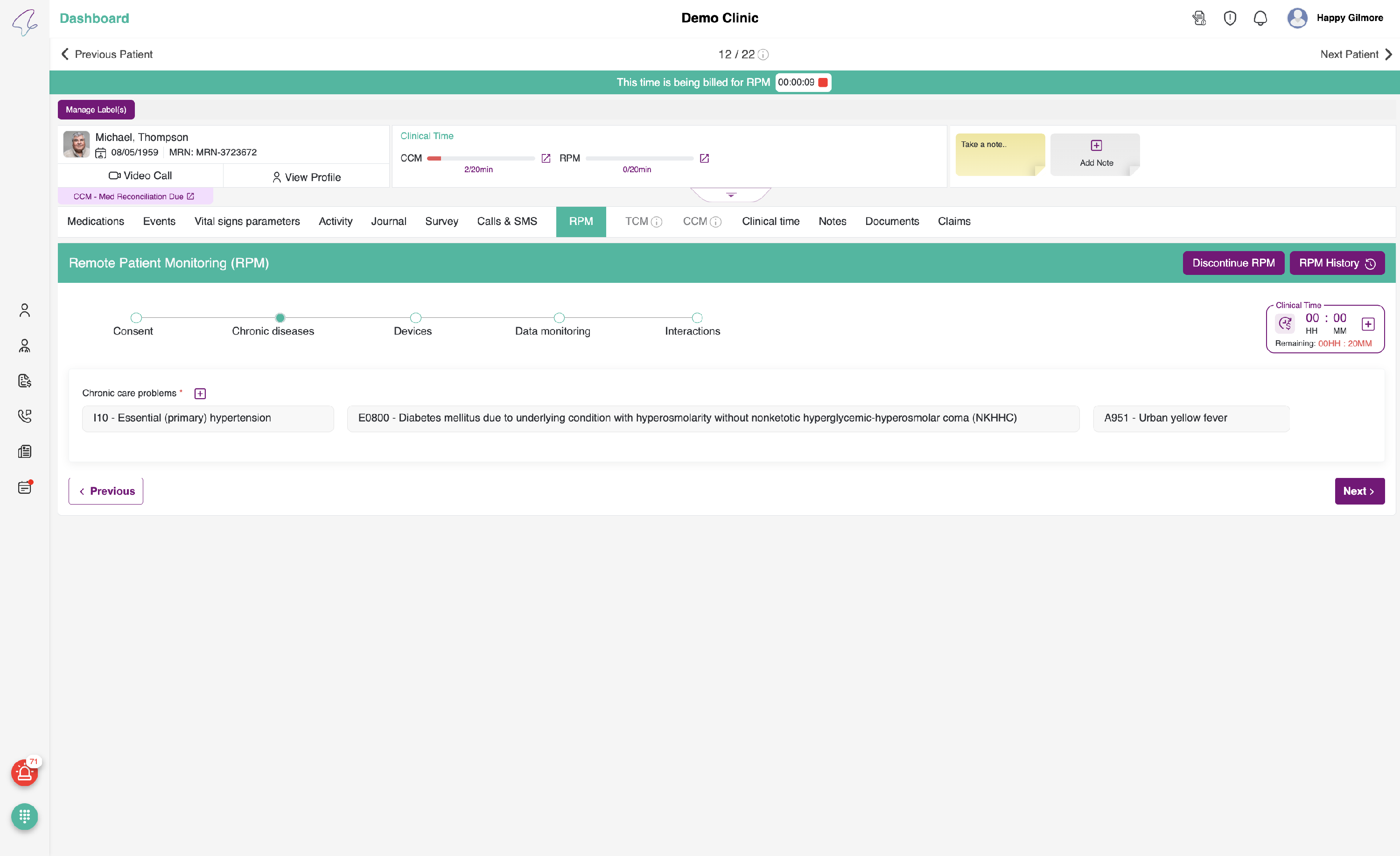
- If you want to stop the billing, you can click on the STOP icon at the top near the header as follows.
- Once you STOP the billing, the other services will be enabled, and the bill will be reflected in the clinical time billing activity section.
2. From Service:
If you would like to initiate the billing process while viewing a specific RPM service tab, you may start billing seamlessly by selecting the Start Billing icon at the top of the page and following the instructions provided in the Billing flow.

- If you would like to bill the records listed in the Billing section, please select the checkbox at the start of each record.

- You can find the "Add Bill" button in the top right of the table. Please click it to open a pop-up for adding a bill, as shown below.

-
Service - The service name will be pre-populated based on the record you selected in billings.
Note: If you select multiple records with different services, then it will be categorised as "others."
- CPT code: - Select the CPT code based on the billing type.
-
Description - Based on the CPT code, you will receive some descriptors from which you can select.
Note: If the desired descriptor is not available, scroll to the bottom of the dropdown, click on the other option, and enter your desired descriptor.
- Provider - The provider's name will be pre-populated based on the record you selected in billings.
- Patient - The patient's name will be pre-populated based on the record you selected in billings.
- From Date - It will be pre-populated, and the date and time will be based on the oldest record selected.
- To Date - It will be pre-populated, and the date and time will be based on the newest record selected.
- Notes - Add a note that is related to the billing.
-
Service Type - It will be pre-populated when you select the CPT code. It is also editable.
After clicking on Add, the billed records will be disabled. The bill will reflect in the Claims tab.
To submit the bill, click on the Bills Tab to navigate to the Bills section.

- Upon navigating to the Bills tab, select the service type in which you have added the bill from clinical time.
Note :
- In RPM, claims will not be generated until there is a phone call record in billable clinical time.
- If you have added a bill with services other than clinical time, please select the 'Others' tab in the service section of the billing.
Clinical Time Logging:
- To view the Clinical Time Logging (Billing) for RPM, go to the Patient Dashboard and click on the Billing Tab. Following screen can be viewed.
- There are 4 sub tabs - RPM, CCM, Others and TCM, billing logs for each program. By default, RPM tab is active.Click on RPM tab.

Clicking on RPM, CCM, TCM and Others tab, will display claims list with checkboxes for each row with details as follows:
- CPT code
- Time
- From (Date & Time)
- To time (Date & Time)
- Topic
- Summary
- Status
- Action
Current Procedural Terminology (CPT) codes vary by service type, including RPM, CCM, and TCM. As a result, CPT codes for each reimbursement type are different.
- Billing Period: You can view invoices on a monthly or quarterly basis.

- When Monthly is selected, we can view the bills that were added during the selected month. When Quarterly is selected, we can view the bills that were added during the selected quarter.

- Users can use the Add Claim option to add a new row to the provided list by entering the required details, including Billing Type, CPT code, topic, Provider, Patient, Date, Start Time, End Time, Meeting Notes, and service type.
- Billing Type, Provider, Patient, and Date are automatically populated.

- To edit the claim details, click the Edit icon in Action. This allows the user to update the details for the selected row in the list, such as the CPT code, topic, Meeting Notes, and service type. Click the Update button to save your changes.

- You can view the New bills.

- To submit bill, check the box, you can view the submit buttons gets enabled. Click on the Submit button.

- User can select the bills from the list and click on Submit.
- The submitted bills cannot be edited.
- To see the bill updates, click on the Refresh icon beside the tabs at the left.
- Each reimbursement type tab have filters as shown:
- All - Shows all the RPM Claims
- New - Displays all the newly submitted bills and are represented by Blue Color
- Submitted - Displays all the submitted bills and are represented by Light Green Color
- Rejected - Displays all the rejected bills and are represented by Red color
- On-Hold - Displays the bills which are kept on-hold and are represented by Amber Color
- Approved - Displays all the approved bills and are represented by Green color
- On clicking the Rejected bills, User can view the Rejected reasons, which shows the date with rejected reason.
- And on clicking the eye icon, you can view the Bill Summary as follows

-
When you click the download icon, you will be able to access the Summary of the RPM Episode. In addition, you may download the document by selecting the floating download button, or use the print button to generate a PDF for printing.
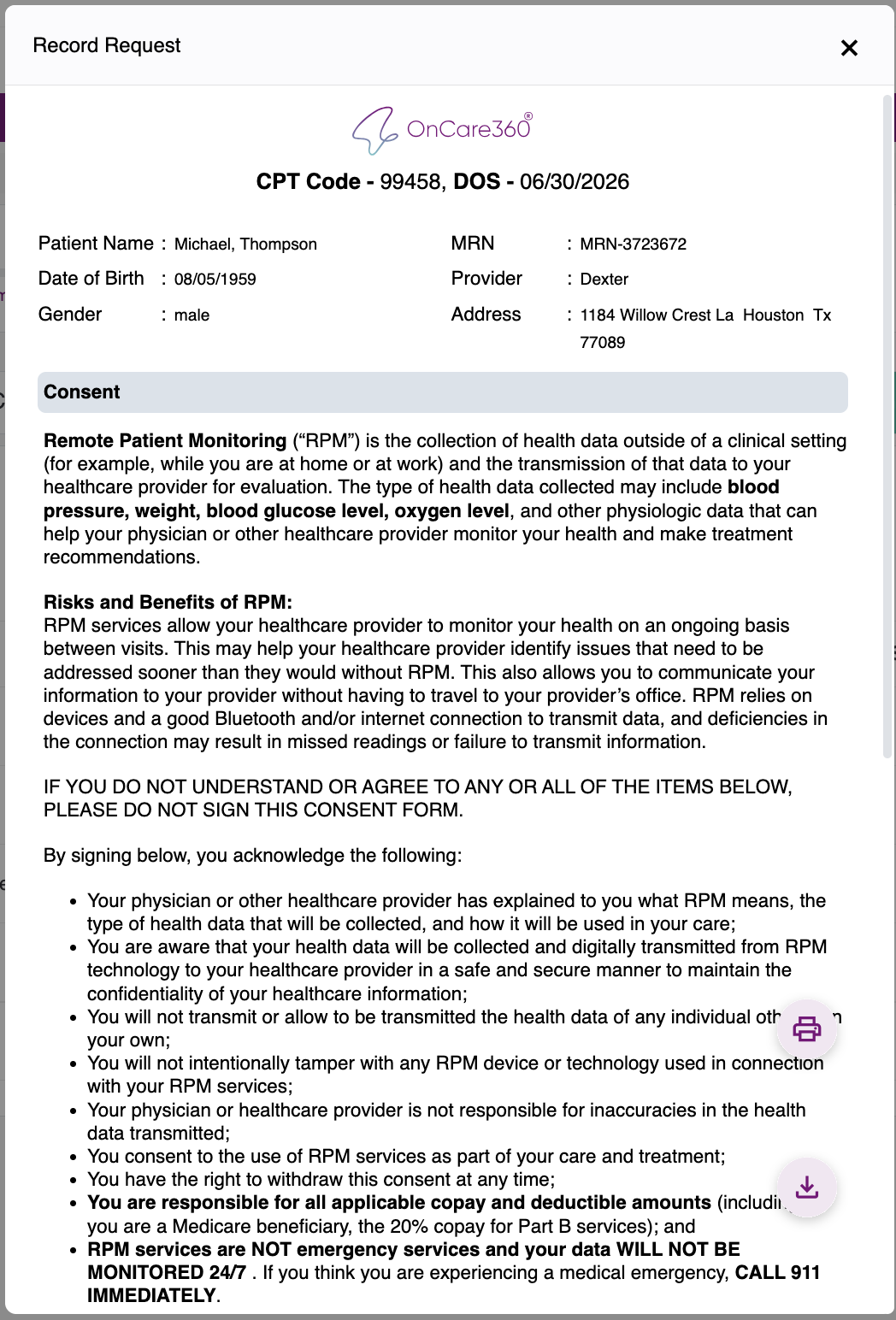
You may also download the bill.
- You can download the records document by clicking the download icon, which is located next to the delete option for each record.
- You can download all selected records at once by clicking the "Download Supporting Documents" button at the top of the table.
Note:
- The above filters doesn’t exist for “Others” tab
- bills when in Submitted, Approved or On-Hold state will be disabled.
- All, New Rejected bills can be submitted again.
- To refresh the table, click on the Refresh icon beside the tabs.
Approve Time:
- The call logs that are submitted are saved in the Billing Portal. Once the Admin logs in, they can view the screen shown below.
- By default, All Programs and All Providers are selected. You may adjust these options based on your preferences.

- On the dashboard, count for Patients enrolled, Patients billed, Bills accepted, Bills pending will be displayed.
-
On the left-hand side, there is a table icon. Upon clicking on it, a pop-up will appear where you can select the required table columns, as shown below.
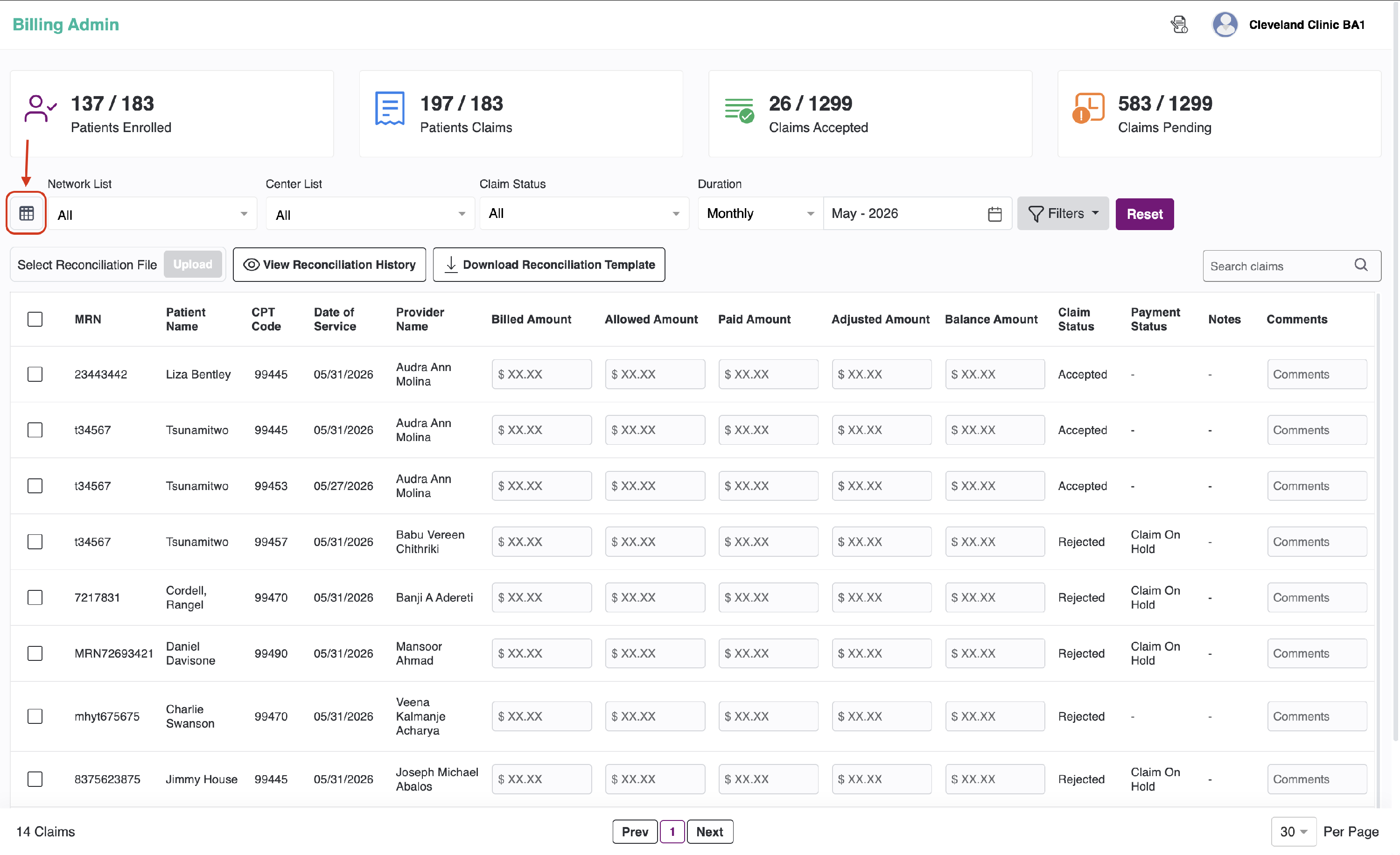
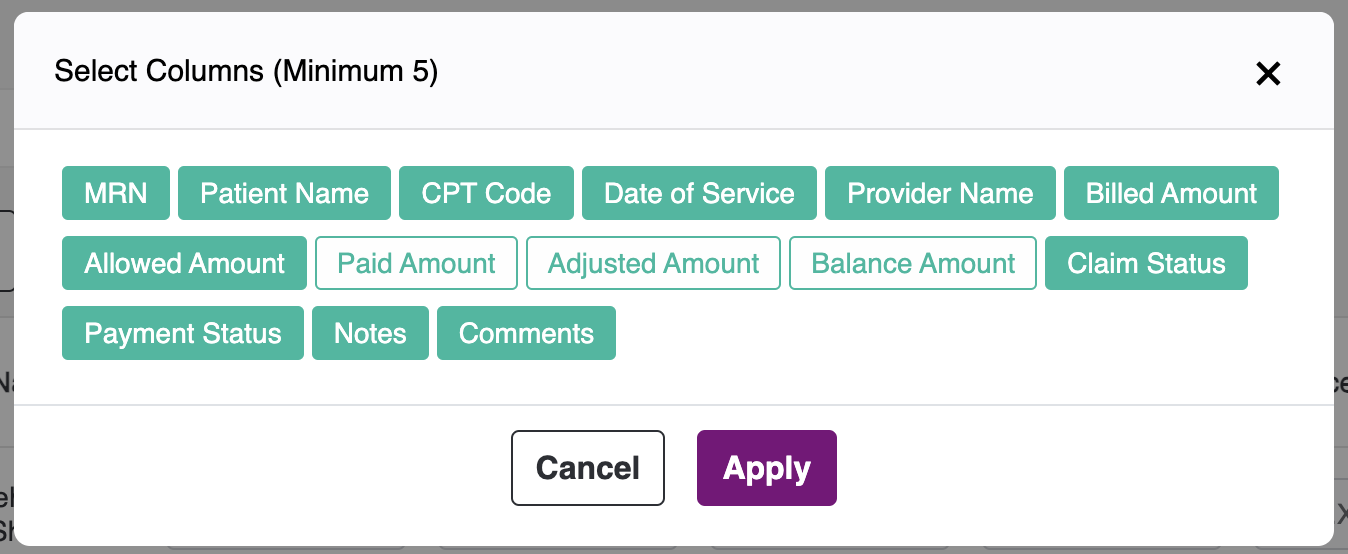
- There are 9 filters: Network, Center, Service, Provider, Claims Status, Payment Status, CTP Code, Duration, and Search Bills, which allow you to search bills for review.
- Users can filter the submitted billing list based on the bill status across four categories.
- Submitted Bills
- Bills on Hold
- Accepted Bills
- Rejected Bills
- Patients that qualify under the rules engine for the set of rules associated with the respective CPT code will be ready to be billed, while patients that do not qualify under those rules will be rejected by the rules engine.
- Users can also filter the submitted billing list based on the type of billing or product (All/RPM/CCM/RTM/TCM/PMPM).
- Click the Status filter, select the Submitted Bill option, then click the Program filter and select CCM. The following screen will be displayed.

-
User can filter the submitted billing list based on the selected duration of Date from and Date to. We can view the bills based on the Duration type - Monthly, Quarterly & Custom. By default, we have Monthly selected.
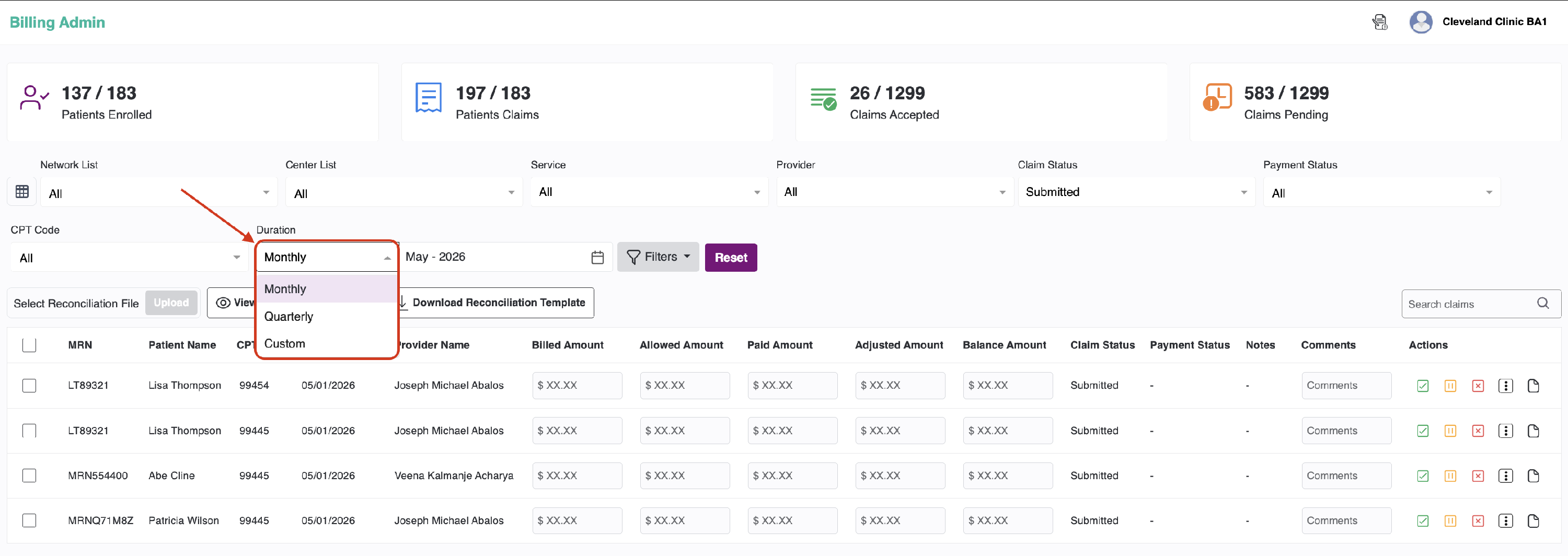
- Users can filter the submitted billing list by provider name for the selected center.
- The search field is available on the dashboard to find the required data.
- Below the filters, the table is displayed with the following headers:
- Checkbox — to select all records
- Patient EMR ID
- Patient Name
- Date of Service — the date on which the service was provided
- CPT Type — RPM/CCM/TCM/Other CPT code and topic
- Note — meeting notes captured while scheduling
- Provider Name
- Bill details — Bill ID and the month, date, and year the billing was submitted
- Actions — Approve / On Hold / Reject
- All submitted bills appear in the list in checkbox form. Users can select bulk actions to mark the selected bills as Approved or Rejected. Users can also download the bills by clicking the Download option.
- To submit the bills, select the checkbox and click Accept selected bills on the right. A pop-up will appear to confirm whether you want to accept the bill. Click Yes to accept the bill.


-
You can also reject bulk bills by selecting the relevant records and clicking the "Reject selected claims" button. This button will be displayed in the header area once you select the bills. After you click the button, a pop-up window will appear prompting you to enter the reason for the rejection. Once you enter the reason, click Submit. The rejected bills will then be listed under Rejected Bills.
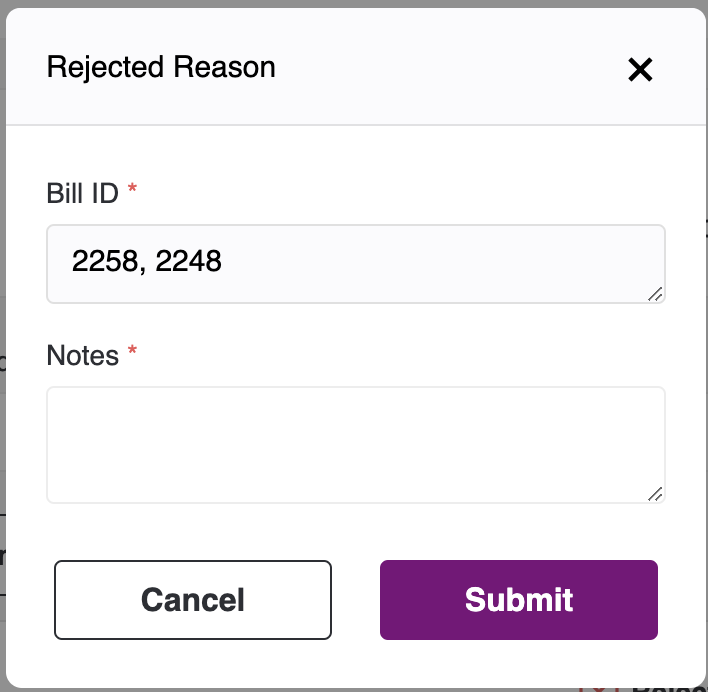
-
You may perform actions—Approve, On Hold, or Reject—for individual calls. After the call log is approved, set to On Hold, or rejected, it will be categorized as Accepted, On Hold, or Rejected, respectively.
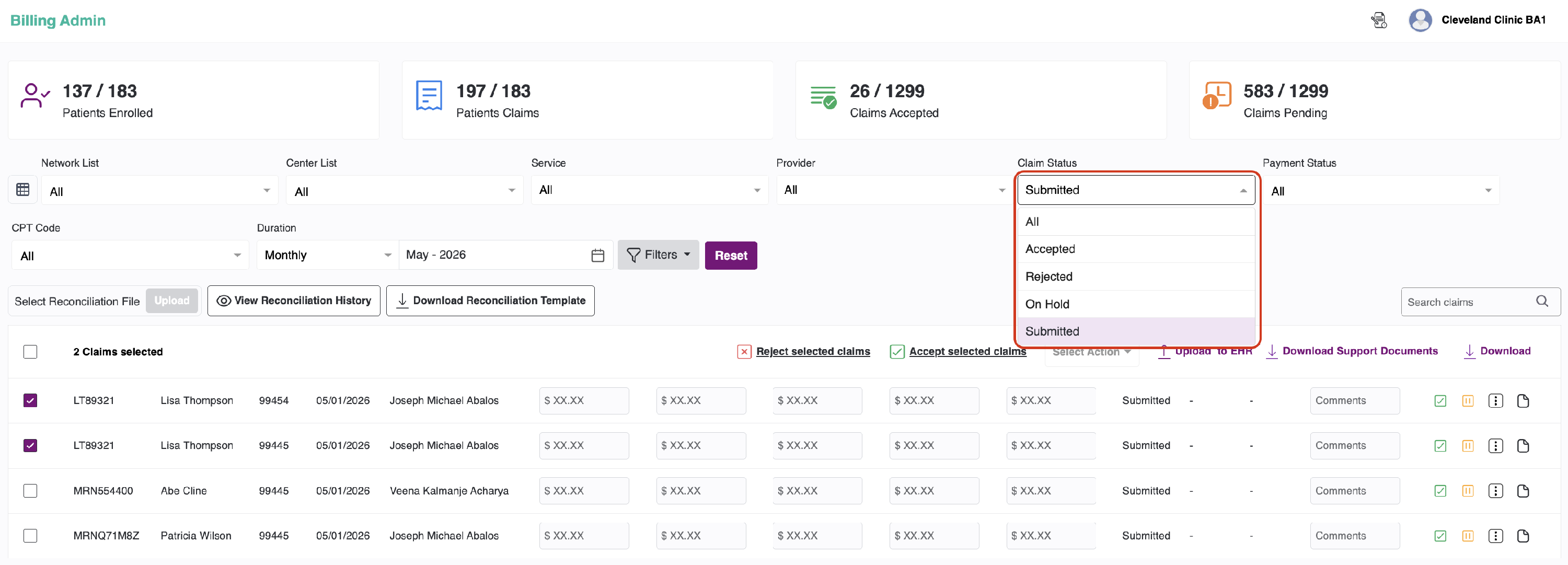
-
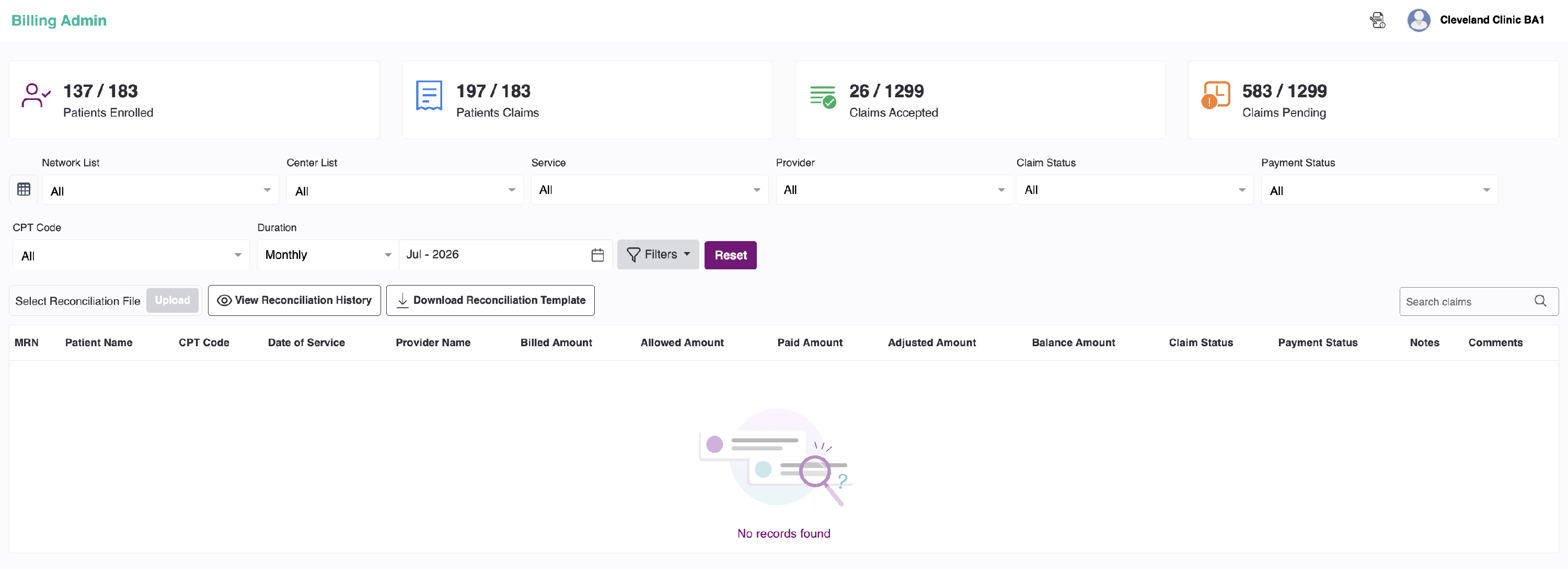
If there are no calls logs, you will see an empty state showing No records found.
- Once the bills are accepted, you can view them by selecting Status as Accepted.
- To download the Bill report, select the checkbox for an individual record, or select the checkbox in the header to download the report for all records.
- You can download the report for any status, including All, Ready to bill, Submitted, On-Hold, Rejected, and Approved.

- You can view download option at the right, click on the download to download the report. You can view it in your downloads.
-
We can also add the Billed Amount, Allowed Amount, Adjusted Amount, Balance Amount for each bill in the input field where you can enter the amount and click outside the field. It will be saved, but it is only for reference and will not be referenced anywhere else.
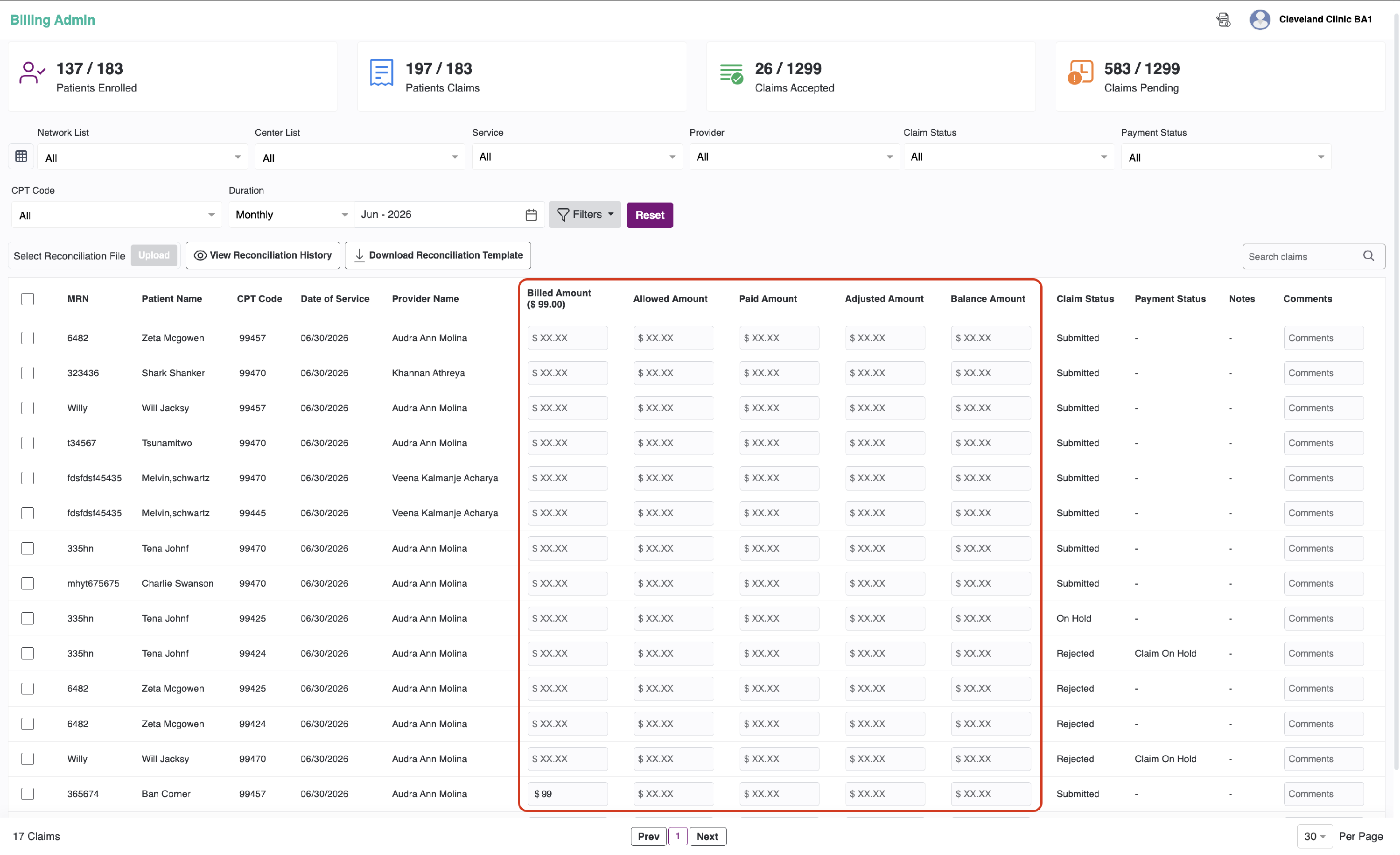
- We also provide the options Claim Denied, Claim Failed, Closed, Patient Pending, Secondary Pending, and Claims On Hold to update the payment status of each claim. To access these options, please select the submitted claim status and click the more icon, as shown in the image below.

-
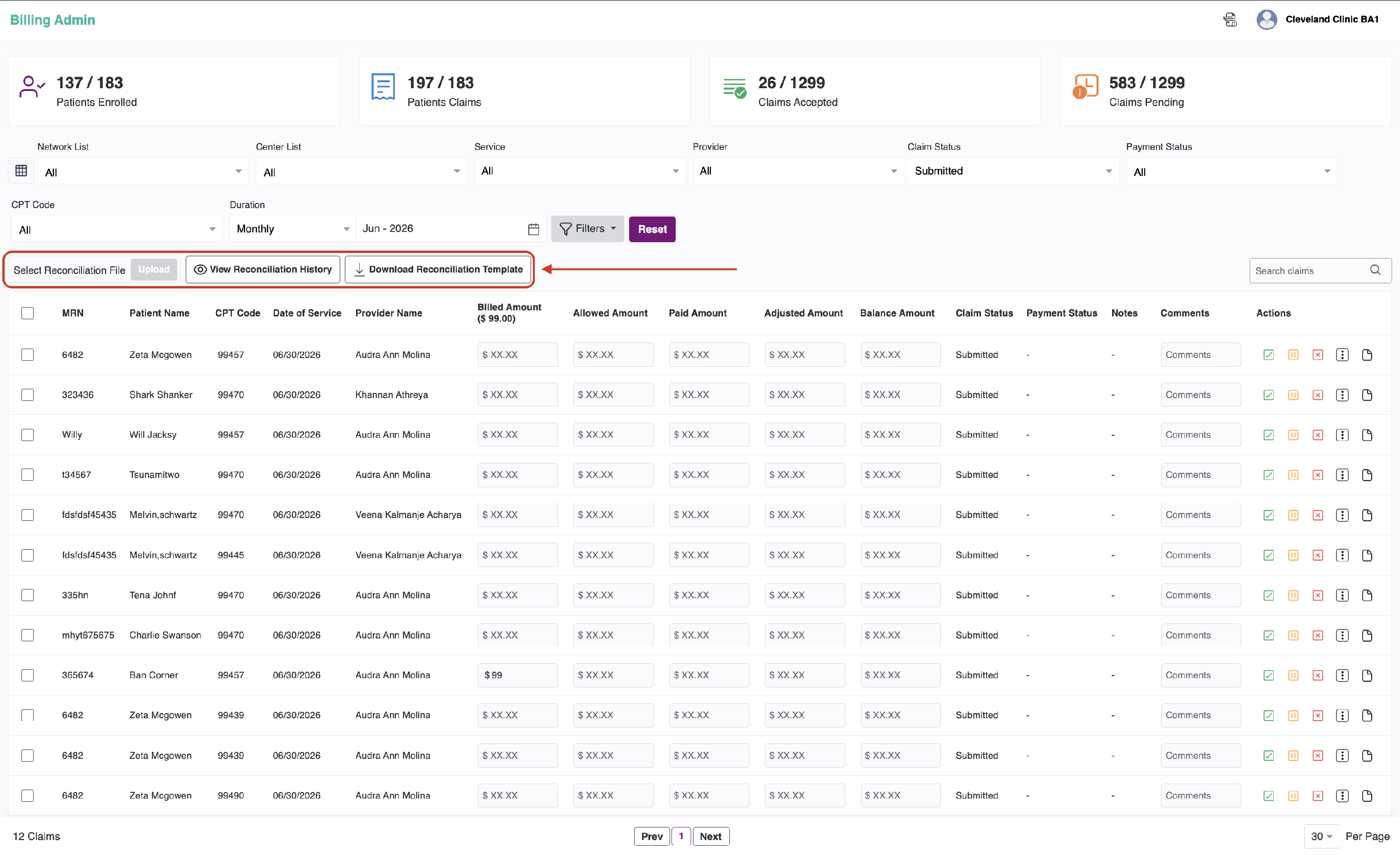
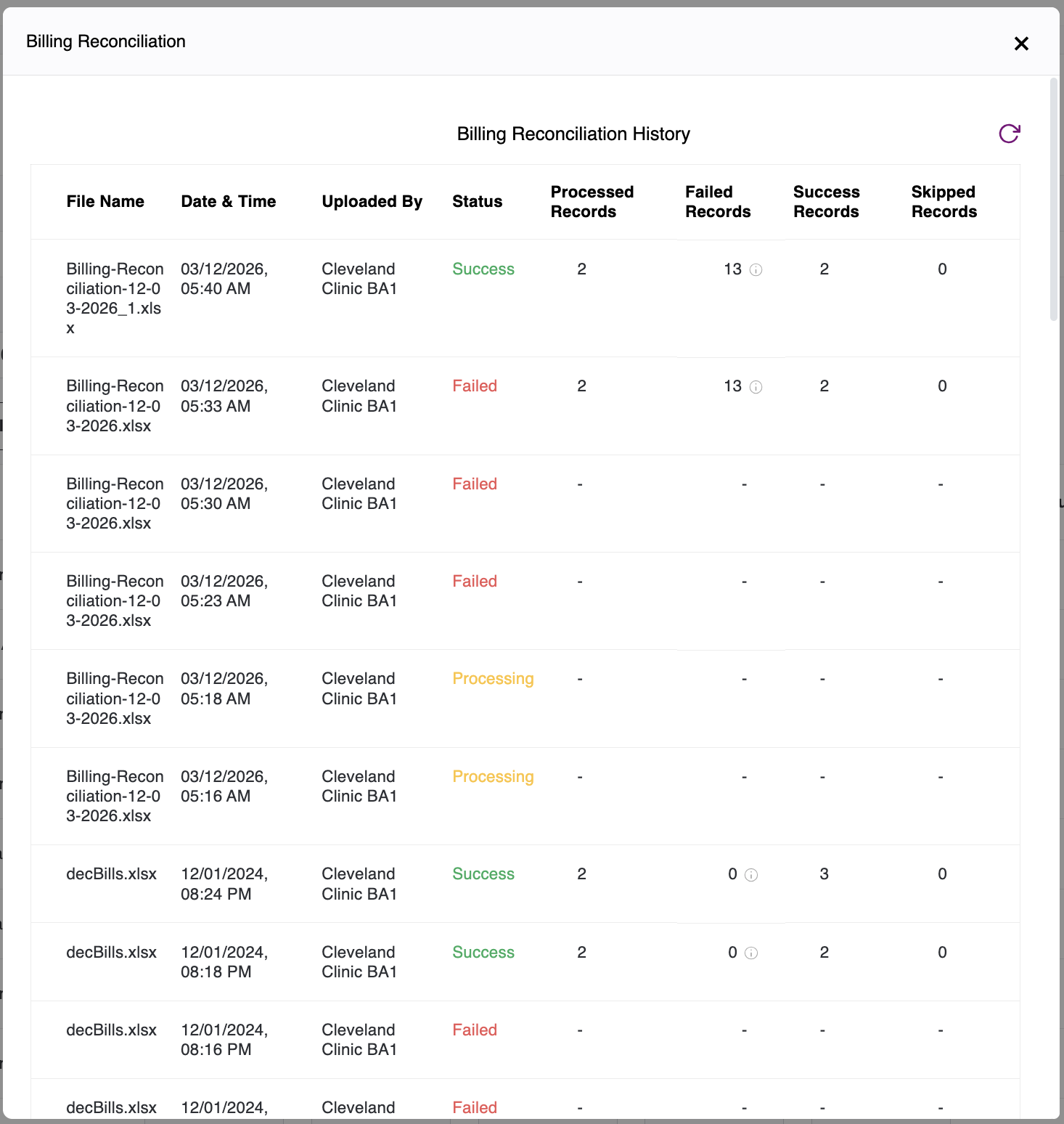
We also have the option to upload the billing reconciliation file. You can upload an Excel file with the claims data of each patient and check the history of the uploaded file. Additionally, you can download a sample file or sample reconciliation template by clicking on the "Download Reconciliation Template" button.
- Patients enrolled – the count of patients who have given the consent for subscriptions available for a center/ total number of patients of a specific center.
- Patients billed – the count of patients for whom the bills are submitted / the total number of patients enrolled.
- Bills accepted – count of bills approved / count of total bills(accepted+ rejected+ on hold+ submitted)
- Bills pending - count of bills in ready to bill state/ count of total bills(accepted+ rejected+ on hold+ submitted)
Due Reminders:
RPM – Chart Review Due:
This alert is generated once every 7 days from the date consent is added. When this alert is closed, 5 minutes of clinical time will be added.

Once you click on the Complete Chart Review button, a popup will appear where you can add notes. These notes will be attached to the clinical time record.
